In short: When organizations introduce new technology without building new skills, the result is wasted investment. Tools go unused, are used only partially, or are worked around with old habits. Protecting a technology investment means planning skills development, change management and leadership support from the start, not after go-live.
Buying new technology is often the easiest part of transformation. The harder part is making sure people can, and want to, use it well. In the Golden Triangle of People, Systems and Technology, this imbalance has a simple formula: new tech + old skills = wasted investment.
Why do technology investments fail to deliver?
Technology is the enabler in the Golden Triangle: it amplifies human effort. But it can only amplify what is already there. When skills, confidence and ways of working have not changed, a new system usually produces one of three outcomes:
- Low adoption: people continue to use spreadsheets, email and old workarounds.
- Shallow use: only the most basic features are used, so most of the value is never realized.
- Misuse: the tool is used incorrectly, creating poor data and new problems.
In each case the organization has paid for capability it is not getting.
What are the warning signs of a skills gap after a technology rollout?
- Workarounds multiply. Teams export data to spreadsheets or keep parallel manual records.
- Support requests stay high long after go-live.
- A few power users carry everyone else. Knowledge sits with a small group instead of the whole team.
- Data quality drops, so reports and analytics cannot be trusted.
- Leaders cannot explain the benefit of the new system to their teams.
How do you close the skills gap and protect your technology investment?
- Plan people and technology together. Make skills development part of the project plan and budget, not an afterthought.
- Assess current skills first. Understand digital confidence and role-specific gaps before you design training.
- Train by role and task. Focus training on the real work each role does in the new system, not generic feature tours.
- Equip leaders to lead the change. Managers need to understand why the change matters and model the new way of working.
- Support after go-live. Provide coaching, quick guides and refreshers once people start using the system for real.
- Measure adoption, not just delivery. Track usage, data quality and business outcomes, and adjust training based on what you learn.
Does this apply to AI as well?
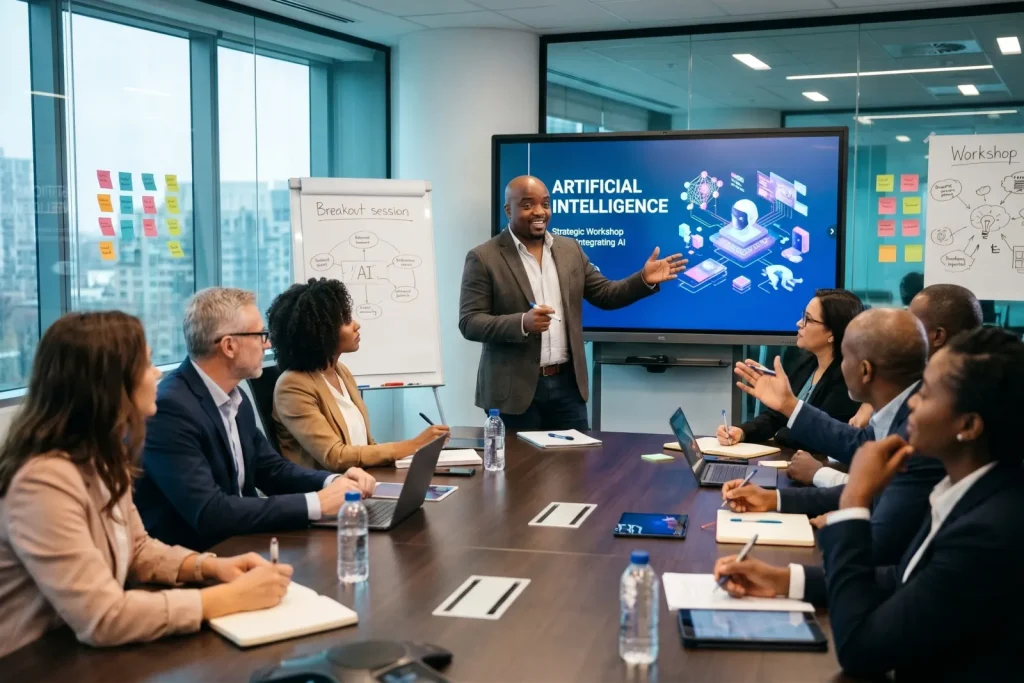
Yes, and even more so. AI tools change how people search for information, write, analyze and make decisions. Without the right skills, organizations risk either ignoring AI entirely or using it in ways that create new risks. Building AI literacy across the workforce, and helping leaders understand where AI creates value, is now a core part of any technology investment. Our AI for Executives workshop is designed to help leaders take that first step.
How Career Builders Group helps
We combine the technology and people corners of the triangle. CBG AI Agency implements practical AI and automation, while Career Builders Academy delivers future-focused training and upskilling so teams can adopt and sustain new tools. See our training and upskilling solutions.
Key takeaways
- New technology without new skills leads to low adoption, shallow use or misuse.
- Plan and budget for skills development as part of every technology project.
- Train by role, equip leaders, and keep supporting people after go-live.
- Measure adoption and business outcomes, not just whether the system went live.
Frequently Asked Questions
Why do new software systems often fail to deliver value?
Usually because people have not been equipped to use them. Without role-specific skills, leadership support and follow-up, teams fall back on old habits, use only basic features, or work around the system.
When should training be planned in a technology project?
From the start. Skills assessment and training design should be part of the project plan and budget, with support continuing after go-live.
What is the best way to train staff on new technology?
Train by role and real tasks, support leaders to champion the change, provide quick guides and coaching after launch, and measure actual adoption.
Is upskilling important for AI adoption?
Yes. AI changes how people work and make decisions. Building AI literacy helps organizations capture value while managing risks such as poor data handling or over-reliance on AI outputs.
Get full value from your technology
Talk to Career Builders Group about role-based training and upskilling that helps your teams adopt new systems and AI with confidence.